Chris Dixon, the entrepreneur-turned angel investor-turned general partner at VC firm Andreessen Horowitz, today said that he believes the 3D printing movement has the potential to revolutionize manufacturing and that it is an area where he would like to make multiple investments in the future. In contrast, he described startups in areas like social networking facing "general fatigue". Earlier this month, Chris Dixon and Andreessen Horowitz led a $30 million Series C round in Shapeways, a 3D printing company, where he has now joined the board.
REDDING, Calif. (AP) ? A Northern California grocery store owner is trying to profit from a suspected thief's botched burglary attempt that was caught on video and went viral.
Footage shows the man breaking the Redding store's window last month and tripping twice as he ran away.
Now store owner Kent Pfrimmer has turned it into a television commercial for his business, Kent's Meats and Groceries.
The Record Searchlight of Redding reports (http://bit.ly/11CzlcU ) that the ad for the store's pastrami features footage of the suspect throwing something at the store's window. The sound of shattering glass can be heard before pastrami appears on camera, followed by the voice-over: "So good, some people will do just about anything to get more."
A call to Redding police to check on the investigation was not immediately returned.
The Honourable Bill Graham, Chancellor of Trinity College, has donated $5 million to the Centre for Contemporary International History.
View Story
In February, U of T reached out to alumni and friends in California who are playing a leading role in the Bay Area?s dynamic innovation economy.
View Story
Backed by eight visionary partners, the Creative Destruction Lab at the Rotman School of Management aims to turn new technologies into profitable businesses.
View Story
U of T researchers have dominated many recent competitions in science and engineering?adding to the University?s disproportionate representation among Canada?s most significant awards.
View Story
The legacy of Canadian visual artist Doris McCarthy, who earned a BA at age 78 and died in 2010 at the age of 100, will continue to thrive at U of T Scarborough.
View Story
The University of Toronto and The W. Garfield Weston Foundation are delighted to announce the 16 inaugural Weston Fellows, recipients of Canada?s most prestigious awards dedicated to international experience at the doctoral level.
View Story
The MasterCard Foundation Scholars Program has made an outstanding US$22.5 million gift to the University of Toronto. The gift aims to help educate and develop young scholars from Africa, preparing them to lead change in their communities.
View Story
The Boundless Campaign, with its themes of boundary-crossing opportunity, openness, inclusion, and impact, has resonated strongly with students who see in it a reflection of their own values and aspirations.
View Story
As we mark the first anniversary of Boundless, we see that the campaign and its core themes have taken root across the University?s divisions and within our community of alumni and friends at home and abroad. The result: the campaign recently surpassed $1.18 billion.
View Story
It has been a year of extraordinary momentum since the launch of Boundless: The Campaign for the University of Toronto in November 2011. One year after the official public launch, we have raised more than $1.18 billion.
View Story
The installation of the Honourable Michael Wilson as the 33rd Chancellor of the University of Toronto marked the opening ceremonies of fall Convocation on the morning of November 12, launching a week of celebration for thousands of students, their families and faculty mentors.
View Story
University of Toronto Scarborough launched the largest fundraising campaign in its history with a celebration at Miller Lash House on November 14, 2012.
View Story
On the evening of November 5th, more than 100 students, faculty, volunteers, alumni and friends gathered at U of T?s Faculty of Dentistry to honour student award recipients and to launch the first phase of the Faculty?s $18 million campaign.
View Story
Nearly 400 students, family, donors, friends and faculty gathered to celebrate the launch of the $25-million campaign for U of T?s Lawrence S. Bloomberg Faculty of Nursing at the Toronto Reference Library?s Bram and Bluma Appel Salon on Tuesday evening to recognize student achievement through the annual Student Awards Ceremony.
View Story
The Asia-Pacific launch of Boundless: the Campaign for the University of Toronto was celebrated recently at a gala event in Hong Kong.
View Story
The Centre for Jewish Studies has launched a public campaign with a major gift from the Tanenbaum family to enhance its impact as a vital intellectual cornerstone in the heart of Toronto and to complement the efforts to build one of the most vibrant centres for Jewish life in the world.
View Story
Thanks to the extraordinary generosity of donors throughout the institution, the University is pleased to report that its Boundless campaign has reached $1.12 billion as of September 30th.
View Story
George Myhal (BEng 1978) is saying thank-you in a big way for his U of T education with a pace-setting $5-million gift to U of T Engineering?s campaign
View Story
Rosie MacLennan (BPHE 2011) knows how to deliver a top performance, on and off the trampoline. A few short months before winning Canada?s only gold medal at the 2012 Olympics, she was hard at work co-chairing a successful fundraising gala in support of the Goldring Centre for High Performance Sport.
View Story
The New One program got started this fall at New College?celebrating its 50th anniversary this year? with the help of a generous $1-million gift from an outstanding graduate and strong supporter, Richard Rooney (B.A. 1977).
View Story
The University of Toronto Faculty of Law is delighted to announce the largest gift to the law school to date: a generous $10-million lead gift to the Building Campaign from the Honourable Henry N. R. ?Hal? Jackman.
View Story
Looking to the future while celebrating a 160-year tradition, the University of St. Michael?s College launched a $50-million campaign on Sept. 29 in the heart of the historic campus east of Queen?s Park.
View Story
The University of Toronto has launched The Fraser Mustard Institute for Human Development (IHD) ? a bold and necessary response to the challenge of providing every child the opportunity to have the best start in life.
View Story
The Munk School of Global Affairs has celebrated the opening of a newly renovated and restored heritage building that doubles the amount of space available to its students, faculty and staff.
View Story
The Faculty of Music heralded an exciting new season of performances, lectures and master classes?and unveiled its campaign to extend the Faculty?s interdisciplinary reach, heighten its international profile and build its infrastructure.
View Story
The Faculty of Applied Science and Engineering kicked off their $200-million campaign that will build on our reputation for excellence, and ensure our place among the world?s leading institutions for engineering education, research and innovation.
View Story
The Faculty of Medicine announced its $500-million campaign that will transform health care by training future leaders and putting scientific discovery into action.
View Story
The Rotman School of Management's expansion has officially opened. The new space doubles the amount of teaching, research, study, presentation and special event space.
View Story
Lynd Forguson loved University College, its intimacy, its diversity, its wonderful way of helping young people.
View Story
The University of Toronto has initiated a visionary matching program to boost the financial support available to its undergraduates.
View Story
Students were front and centre as U of T Mississauga unveiled its ambitious $60-million campaign that will prepare the campus for a new era of global leadership and societal impact.
View Story
Victoria University President Paul Gooch helped launch Vic?s ?Imagination Unbound? fundraising campaign during a ceremony at Isabel Bader Theatre.
View Story
The campaign for the Faculty of Arts and Science will strengthen the University?s capacity to prepare global citizens and to meet the most pressing global challenges of the 21st century.
View Story
At the end of January, Boundless: The Campaign for the University of Toronto surpassed $1 Billion in contributions.
View Story
With $17 Million raised, U of T?s Tanz Centre is half-way to its $31 Million Campaign goal. Reaching this milestone is, in large measure, a credit to the tireless work of fundraising co-chairs Mark Tanz (BA 1952 UC) and Lionel Schipper (JD 1956), who also happen to be the Centre?s most generous benefactors.
View Story
More than 200 alumni and friends of the University of Toronto?s Faculty of Law gathered on Nov. 29, 2011 to celebrate the launch of a $53-million building campaign to position Canada's number one law school for a future of boundless leadership, potential and vision.
View Story
Thanks to the extraordinary efforts of benefactors, the Goldring Centre for High Performance Sport will open early 2015.
View Story
The following speech was delivered by President David Naylor at the launch event for Boundless: The Campaign for the University of Toronto, on November 20, 2011.
View Story
Nearly 1,000 alumni, friends, students, faculty and staff gathered in Convocation Hall on Sunday, November 20 for a special event marking the start of the public phase of the University?s comprehensive fundraising campaign?the University?s third in the last 30 years.
View Story
Watch the video introducing Boundless, the campaign for the University of Toronto.
View Story
The University of Toronto has unveiled Boundless, the largest fundraising campaign in Canadian university history.
WASHINGTON (AP) ? Federal officials say they're delaying a policy that would allow passengers to carry small knives, bats and other sports equipment onto airliners.
The Transportation Security Administration said Monday that the policy change has been delayed to accommodate feedback from an advisory committee made up of aviation industry, consumer and law enforcement officials.
John Pistole (PIH'-stohl), head of the Transportation Security Administration, proposed the policy change last month, saying it would free up the agency to concentrate on protecting against greater threats. TSA screeners confiscate about 2,000 small folding knives from passengers every day.
The policy was to go into effect Thursday. The TSA's statement said the delay was temporary, but no new date for implementation was provided.
The policy has been fiercely opposed by flight attendants' unions.
SHANGHAI (Reuters) - China reported another death and four new infections from a new strain of bird flu on Saturday, raising the death toll to 18, the official Xinhua News Agency said.
The H7N9 virus has been found in 95 people, mostly in eastern China. The latest victim is a 69-year old man surnamed Xu from Zhejiang province who passed away Friday night after emergency treatment failed, Xinhua said.
Zhejiang province reported three new infection cases with all three patients in critical condition. The eastern costal province of Jiangsu also reported another bird flu infection.
On Friday health officials raised questions about the source of this strain of bird flu indicating that more than half of patients had no contact with poultry.
While it is not clear how people are becoming infected, the World Health Organisation (WHO) says there is no evidence of the most worrying scenario - sustained transmission between people.
The WHO's China representative, Michael O'Leary, issued data on Friday showing that half of the cases analyzed had no known contact with poultry, the most obvious potential source, but he said it appeared human-to-human transmission was rare.
China announced the first case of human infection of the H7N9 in late March and has since has been praised by the WHO for its handling of the situation.
(Reporting by Melanie Lee; Editing by Sanjeev Miglani)
Apr. 18, 2013 ? 'Keep it simple' is a good rule of thumb when designing biocontrol programs to combat weeds and invasive plants, according to a meta-analysis of studies by UBC biodiversity experts.
Biocontrol programs use an invasive plant's natural enemies (insects and pathogens) to reduce its population. Most biocontrol programs combine many different enemies -- typically about three different species, but sometimes as many as 25 -- with the hope that at least one will prove effective.
But more isn't necessarily better. Some combinations of enemy species can actually end up competing or interfering with each other, instead of attacking the weed.
"It's important to get the right combination of biocontrol agents, as testing species is costly and time-consuming, and no amount of testing can eliminate the risk that something unexpected will occur with the introduction of a new species," says Andrea Stephens, lead author on the paper published in the Proceedings of the Royal Society B this week.
Until now, biocontrol managers have chosen weed enemies to release based on the individual effect of each species in isolation, with little thought to overall combinations.
"Our study suggests that this approach can lead to ineffective biocontrol, because the interactions between the released enemies can reduce the overall effectiveness of biocontrol," says Diane Srivastava, author on the paper and professor in UBC's Biodiversity Research Centre.
Of the 75 combinations the researchers investigated, about a quarter appeared to have a smaller combined impact than expected. The researchers suggest simple species combination rules could improve the effectiveness of biocontrol programs.
The study recommends avoiding combinations of species that attack the same part of the plant at the same time, as well as assessing the impact of species attacking reproductive structures.
"In most cases damage from different species of insects was independent," says Judith Myers, Professor Emerita and author on the paper. "But insect species feeding on the seeds of plants tend to compete and so multiple introductions can be detrimental."
One of the studies researchers analyzed focused on three agents (two species of weevils and a fly) that have been released in western North America to control two species of invasive plants, diffuse and spotted knapweed. The weevils consume the fly larvae, nullifying the effectiveness of the fly.
Share this story on Facebook, Twitter, and Google:
Other social bookmarking and sharing tools:
Story Source:
The above story is reprinted from materials provided by University of British Columbia.
Note: Materials may be edited for content and length. For further information, please contact the source cited above.
Journal Reference:
A. E. A. Stephens, D. S. Srivastava, J. H. Myers. Strength in numbers? Effects of multiple natural enemy species on plant performance. Proceedings of the Royal Society B: Biological Sciences, 2013; 280 (1760): 20122756 DOI: 10.1098/rspb.2012.2756
Note: If no author is given, the source is cited instead.
Disclaimer: Views expressed in this article do not necessarily reflect those of ScienceDaily or its staff.
From Tom Cruise and Olga Kurylenko attempting to save Earth in Oblivion to Chadwick Boseman living out Jackie Robinson's career on the silver screen in 42, here are the movies to check out. Will you be grabbing your popcorn and catching one of them this weekend?
Welcome back for another quick look at some of the green news headlines from the past week. This edition features: awesome vacation destinations powered by renewable energy; Toyota surpasses 5 million hybrids sold milestone; New York City bike sharing members will have access to 6,000 bicycles; and reducing food waste for World Environment Day.
(photo: bluelagoon.com | Iceland)
Green Vacation Spots Powered By Renewable Energy. From Huffington Post: ?A major task for anyone taking a trip is finding the right accommodations. Luckily, for those of us who want to be Earth-friendly while on the road, this doesn?t have to mean trading a comfortable hotel bed for a tent. Whether you want to go completely off the grid while still retaining some luxuries and comforts or you simply want to make your travels as green as possible without too much sacrifice, these resorts and destinations, all powered by renewable energy, should be at the top of your list.? See the full slideshow of destinations here.
Toyota hybrid sales pass 5 million mark. From Reuters: ?Toyota Motor Corp has sold more than 5 million gasoline-electric hybrid vehicles as of the end of March since they first went on sale in 1997, the automaker said on Wednesday. Its Prius series accounted for about 70 percent of that, making it the most popular hybrid model in the automotive industry. Globally, Toyota sold 1.2 million hybrid vehicles in 2012, the first time it sold more than 1 million hybrids in a single year. Helped by government subsidies and tax incentives, about 17 percent of the vehicles sold in Japan in 2012 were hybrids. Toyota and Lexus, its luxury brand, sold 678,000 hybrids, accounting for three-quarters of the total hybrids sold. In the United States, Toyota sold about 327,000 hybrids. Hybrid accounted for roughly 3 percent of the total sales, with two of every three hybrids sold being a Toyota or Lexus. Toyota sold just 17,300 hybrids in China, the world?s biggest auto market, in 2012, accounting for about 2 percent of its total sales there.?
New York City?s Citibike bike-share starts selling annual memberships for $95. From Treehugger: ?New York City?s bike-sharing program is finally getting close to launching. Annual memberships for Citibike are now available, and the first 5,000 members will be considered ?founding members? and get some perks (though what exactly is still not clear). There are also discounted yearly memberships available for those who qualify (criteria here), and daily and weekly memberships for those who suffer from commitment anxiety. 6,000 bikes are expected to be deployed at 300 stations.? ?View the bike station map.
World Environment Day is June 6, 2013. Even though it?s not until June, we wanted to highlight the theme for this year?s World Environment Day straight from the United Nations Environment Programme:
?The theme for this year?s World Environment Day celebrations is Think.Eat.Save. Think.Eat.Save is an anti-food waste and food loss campaign that encourages you to reduce your foodprint. According to the UN Food and Agriculture Organization (FAO), every year 1.3 billion tonnes of food is wasted. This is equivalent to the same amount produced in the whole of sub-Saharan Africa. At the same time, 1 in every 7 people in the world go to bed hungry and more than 20,000 children under the age of 5 die daily from hunger.
While the planet is struggling to provide us with enough resources to sustain its 7 billion people (growing to 9 billion by 2050), FAO estimates that a third of global food production is either wasted or lost. Food waste is an enormous drain on natural resources and a contributor to negative environmental impacts.
This year?s campaign rallies you to take action from your home and then witness the power of collective decisions you and others have made to reduce food waste, save money, minimise the environmental impact of food production and force food production processes to become more efficient.
If food is wasted, it means that all the resources and inputs used in the production of all the food are also lost. For example, it takes about 1,000 litres of water to produce 1 litre of milk and about 16,000 litres goes into a cow?s food to make a hamburger. The resulting greenhouse gas emissions from the cows themselves, and throughout the food supply chain, all end up in vain when we waste food.
In fact, the global food production occupies 25% of all habitable land and is responsible for 70% of fresh water consumption, 80% of deforestation, and 30% of greenhouse gas emissions. It is the largest single driver of biodiversity loss and land-use change.
Making informed decision therefore means, for example, that you purposefully select foods that have less of an environmental impact, such as organic foods that do not use chemicals in the production process. Choosing to buy locally can also mean that foods are not flown halfway across the world and therefore limit emissions.? _____________________________________________________________________________ Planet Forward is an online retailer of ethically-made, earth-friendly products designed for everyday use with a distinctly urban feel. Products include reusable stainless steel bottles, stainless steel thermal travel mugs, waste-free lunch bags, reusable bags, Make-it-Yourself toxin-free Green Cleaning kits, organic fashions and other accessories. SALE 50% OFF ALL PRODUCTS ? SHOP NOW!
DREAM and Sage Bionetworks tap the wisdom of the crowd to impact breast cancer prognosisPublic release date: 17-Apr-2013 [ | E-mail | Share ]
Contact: Regina Warmoth warmoth@sagebase.org 206-667-2102 Sage Bionetworks
Two new reports issuing in Science Translational Medicine (STM) today showcase the potential of teams of scientists working together to solve increasingly complex medical problems. The results demonstrate that better predictors of breast cancer progression than those currently available can be rapidly evolved by running open Big Data Challenges such as The Sage Bionetworks/DREAM Breast Cancer Prognosis Challenge (BCC).
In breast cancer, a key undertaking is determining those patients whose disease is most likely to progress rapidly and therefore tailor the best course of treatment for them. Currently oncologists are using gene-expression based assays such as MammaPrint and Oncotype Dx, that are based on 10 year old science, and both do better with breast cancer risk prediction than models based only on clinical data.
Dr. Stephen Friend, the Founder of Sage Bionetworks and one of the organizers of the BCC reflects, Ten years ago, members of our research group used gene expression profiling to build one of the first breast cancer predictors. Mammaprint and Oncotype Dx were developed off of that but further improvement seems to have stalled. We wondered if running a Challenge like BCC would motivate lots ofdifferent groups to tackle this problem, some working collaboratively, and if that might be more fruitful than the current go it alone single researcher approach.
To push the envelope on all the innovations that could be incorporated into the BCC, Sage partnered with the DREAM Project, a visionary distributed systems biology group that has run 24 successful open computational challenges over the last five years.
DREAMs founder and leader, Dr. Gustavo Stolovitzky saw the BCC as an opportunity to, refocus our efforts to create a collaborative research environment that fosters a complementary way of doing science, which accelerates the pace of discovery with the goal of contributing to a faster reduction of suffering due to disease. This seems to me like an ethical imperative.
The goal of the BCC was to build a computational model that accurately predicts breast cancer survival. To do this, participants of the Challenge used genomic and clinical information from 2000 women diagnosed with breast cancer (the METABRIC data set). They accessed this data on Synapse, Sage Bionetworks open compute platform for data sharing and analysis: Google donated cloud-based standardized virtual machines that each participant used to train their models against the data. Individual participants and/or teams submitted their computational models to Synapse as open source code made viewable to all: their models were assessed against a hidden dataset and their scores were reported on a real-time leaderboard. The combination of immediate feedback and code-sharing allowed participants to improve their leaderboard ranking by adjusting their own models or by borrowing the code of others to forge new models.
Throughout the July-October 2012 model-training phase, a crowd of 350 players from 35 countries across the globe joined the Challenge and submitted a total of 1700 computational models for scoring. The winning model was determined by scoring the predictive accuracy of players models against a newly generated data set: for this, the Avon Foundation For Women funded the generation of gene expression and copy number data as well as collection of corresponding clinical information from 180 breast cancer patients. Finally, the BCC organizers recognized that the basic science community might be most energized to participate if the Challenge prize were not money but the invitation to publish an article about the winning model in a top tier journal. The editors of STM saw the unique opportunity to run their own experiment on how to structure the peer-review process for competition-based crowdsourcing studies such as the BCC. Todays issue of STM features not only the winners article (the BCC Challenge prize) and a report from the BCC organizers on the Challenges conception, execution and insights -- STM also chose to highlight the BCC with an Editorial Summary and an iconic cover of Rosie the Riveter, intended to symbolize the power of women and their data to transform health.
Quipped Challenge participant Richard Savage (MRC Fellow in Biostatistics at the University of Warwick) on the prospect of winning the opportunity to publish in STM, This is huge and a genuinely new way to do some great science. I really think the organizers are onto something with this.
The winner turned out not to be a breast cancer doctor, or even a breast cancer researcher: the winning team (Attractor Metagenes) hails from Professor Dimitris Anastassious laboratory at Columbia University's School of Engineering and Applied Science. Anastassiou, now a member of the Columbia Initiative in Systems Biology, funded this research from his own inventors research allocation of patent royalties related to his previous work on digital television, which is now used in all DVDs and TV broadcasting systems worldwide. Working with two of his Ph.D. students, they developed the winning model underpinned by so-called attractor metagenes, gene signatures that they had identified as behaving similarly in multiple cancer types. They refer to attractor metagenes as bioinformatic hallmarks of cancer: Remarks Professor Anastassiou, We had discovered these pan-cancer gene signatures previously, and so we hypothesized that they play important roles in cancer in general. The BCC allowed us to prove that they are indeed highly prognostic at least in breast cancer. Indeed, the winning models predictive accuracy for breast cancer survival outperformed the best 60 models of a pre-competition group of expert programmers and bested current clinical standards. He is now excited with the prospect of collaborating with medical researchers to make good use of these signatures of cancer for potential use in diagnostic, prognostic and eventually therapeutic productsapplicable in multiple cancer types.
Based on the success of the BCC, Sage Bionetworks and DREAM announced earlier this year that they would merge to run open science computational Challenges which foster the broader collaboration of the research community and provide a meaningful impact to both discovery and clinical research. Their merger provides a collaborative framework that will bring the ideals of open science one step closer to reality.
The BCC demonstrated the wisdom of the crowd to develop predictive models but also highlighted that the value of those models is limited by the questions being posed and by the data being utilized. Even as the BCC reports in this weeks issue of STM, Sage Bionetworks and DREAM are announcing five DREAM8 Challenges at Sages 4th Commons Congress taking place in San Francisco and working with the Avon Foundation For Women, Susan G. Komen, the Breast Cancer Research Foundation to develop the next BCC which will start by mobilizing breast cancer patients to donate their data to drive the solving of a clinically relevant question inbreast cancer with the potential to transform patient treatment.
###
ABOUT THE DREAM PROJECT
The Dialogue on Reverse Engineering Assessment and Methods Project (DREAM Project), founded in 2006 by Andrea Califano (Columbia University) and Gustavo Stolovitzky (IBM), was originally conceived as an initiative to advance thenascent field of network biology through the organization of Challenges on network reconstruction and pathway inference. Since the first set of network inference challenges of 2007 (DREAM2) the concept of using collaborative-competitions as a vehicle to carry on a meaningful dialogue in the computational biology community has evolved significantly. In 2012, thelast DREAM7 project featured four powerful challenges of which one was on network biology and the other three dealt with three important problems in translational medicine. With the experience gathered by the launching of 24successful challenges over the past five years, the Challenge concept has reached a status of legitimacy and maturity. The DREAM Challenges have brought rigor in the process of verification of computational methods, have enabled the democratization of different kinds of biological data, and have facilitated the collaboration of dozens of research teams. This success has triggered considerable interest by different government institutions and private organizations in working with DREAM to engage distributed teams to solve tough computational problems in biomedical research.
ABOUT SAGE BIONETWORKS
Sage Bionetworks is a nonprofit biomedical research organization, founded in 2009, with a vision to promote innovations in personalized medicine by enabling acommunity-based approach to scientific inquiries and discoveries. Sage Bionetworks strives to activate patients and to incentivize scientists, funders and researchers to work in fundamentally new ways in order to shape research, accelerate access to knowledge and transform human health. It is located on the campus of the Fred Hutchinson Cancer Research Center in Seattle, Washington and is supported through a portfolio of philanthropic donations, competitive research grants, and commercial partnerships. More information is availableat www.sagebase.ort.
Media Contacts:
Stephen Friend
Sage Bionetworks
Tel: 206-667-2101
Email: friend@sagebase.eu
Dimitris Anastassiou
Columbia University
Tel: 201-658-9913
Email: da8@columbia.edu
Karyn Margolis
Avon Foundation for Women
Tel: 212-282-5666
Email: Karyn.margolis@avonfoundation.org
Jennifer Anderson
Communications Officer
Science Press Package
AAAS Office of Public Programs
Phone: 202-326-6466
Twitter: @scipak
Tumblr: http://scipak.tumblr.com/
[ | E-mail | Share ]
?
AAAS and EurekAlert! are not responsible for the accuracy of news releases posted to EurekAlert! by contributing institutions or for the use of any information through the EurekAlert! system.
DREAM and Sage Bionetworks tap the wisdom of the crowd to impact breast cancer prognosisPublic release date: 17-Apr-2013 [ | E-mail | Share ]
Contact: Regina Warmoth warmoth@sagebase.org 206-667-2102 Sage Bionetworks
Two new reports issuing in Science Translational Medicine (STM) today showcase the potential of teams of scientists working together to solve increasingly complex medical problems. The results demonstrate that better predictors of breast cancer progression than those currently available can be rapidly evolved by running open Big Data Challenges such as The Sage Bionetworks/DREAM Breast Cancer Prognosis Challenge (BCC).
In breast cancer, a key undertaking is determining those patients whose disease is most likely to progress rapidly and therefore tailor the best course of treatment for them. Currently oncologists are using gene-expression based assays such as MammaPrint and Oncotype Dx, that are based on 10 year old science, and both do better with breast cancer risk prediction than models based only on clinical data.
Dr. Stephen Friend, the Founder of Sage Bionetworks and one of the organizers of the BCC reflects, Ten years ago, members of our research group used gene expression profiling to build one of the first breast cancer predictors. Mammaprint and Oncotype Dx were developed off of that but further improvement seems to have stalled. We wondered if running a Challenge like BCC would motivate lots ofdifferent groups to tackle this problem, some working collaboratively, and if that might be more fruitful than the current go it alone single researcher approach.
To push the envelope on all the innovations that could be incorporated into the BCC, Sage partnered with the DREAM Project, a visionary distributed systems biology group that has run 24 successful open computational challenges over the last five years.
DREAMs founder and leader, Dr. Gustavo Stolovitzky saw the BCC as an opportunity to, refocus our efforts to create a collaborative research environment that fosters a complementary way of doing science, which accelerates the pace of discovery with the goal of contributing to a faster reduction of suffering due to disease. This seems to me like an ethical imperative.
The goal of the BCC was to build a computational model that accurately predicts breast cancer survival. To do this, participants of the Challenge used genomic and clinical information from 2000 women diagnosed with breast cancer (the METABRIC data set). They accessed this data on Synapse, Sage Bionetworks open compute platform for data sharing and analysis: Google donated cloud-based standardized virtual machines that each participant used to train their models against the data. Individual participants and/or teams submitted their computational models to Synapse as open source code made viewable to all: their models were assessed against a hidden dataset and their scores were reported on a real-time leaderboard. The combination of immediate feedback and code-sharing allowed participants to improve their leaderboard ranking by adjusting their own models or by borrowing the code of others to forge new models.
Throughout the July-October 2012 model-training phase, a crowd of 350 players from 35 countries across the globe joined the Challenge and submitted a total of 1700 computational models for scoring. The winning model was determined by scoring the predictive accuracy of players models against a newly generated data set: for this, the Avon Foundation For Women funded the generation of gene expression and copy number data as well as collection of corresponding clinical information from 180 breast cancer patients. Finally, the BCC organizers recognized that the basic science community might be most energized to participate if the Challenge prize were not money but the invitation to publish an article about the winning model in a top tier journal. The editors of STM saw the unique opportunity to run their own experiment on how to structure the peer-review process for competition-based crowdsourcing studies such as the BCC. Todays issue of STM features not only the winners article (the BCC Challenge prize) and a report from the BCC organizers on the Challenges conception, execution and insights -- STM also chose to highlight the BCC with an Editorial Summary and an iconic cover of Rosie the Riveter, intended to symbolize the power of women and their data to transform health.
Quipped Challenge participant Richard Savage (MRC Fellow in Biostatistics at the University of Warwick) on the prospect of winning the opportunity to publish in STM, This is huge and a genuinely new way to do some great science. I really think the organizers are onto something with this.
The winner turned out not to be a breast cancer doctor, or even a breast cancer researcher: the winning team (Attractor Metagenes) hails from Professor Dimitris Anastassious laboratory at Columbia University's School of Engineering and Applied Science. Anastassiou, now a member of the Columbia Initiative in Systems Biology, funded this research from his own inventors research allocation of patent royalties related to his previous work on digital television, which is now used in all DVDs and TV broadcasting systems worldwide. Working with two of his Ph.D. students, they developed the winning model underpinned by so-called attractor metagenes, gene signatures that they had identified as behaving similarly in multiple cancer types. They refer to attractor metagenes as bioinformatic hallmarks of cancer: Remarks Professor Anastassiou, We had discovered these pan-cancer gene signatures previously, and so we hypothesized that they play important roles in cancer in general. The BCC allowed us to prove that they are indeed highly prognostic at least in breast cancer. Indeed, the winning models predictive accuracy for breast cancer survival outperformed the best 60 models of a pre-competition group of expert programmers and bested current clinical standards. He is now excited with the prospect of collaborating with medical researchers to make good use of these signatures of cancer for potential use in diagnostic, prognostic and eventually therapeutic productsapplicable in multiple cancer types.
Based on the success of the BCC, Sage Bionetworks and DREAM announced earlier this year that they would merge to run open science computational Challenges which foster the broader collaboration of the research community and provide a meaningful impact to both discovery and clinical research. Their merger provides a collaborative framework that will bring the ideals of open science one step closer to reality.
The BCC demonstrated the wisdom of the crowd to develop predictive models but also highlighted that the value of those models is limited by the questions being posed and by the data being utilized. Even as the BCC reports in this weeks issue of STM, Sage Bionetworks and DREAM are announcing five DREAM8 Challenges at Sages 4th Commons Congress taking place in San Francisco and working with the Avon Foundation For Women, Susan G. Komen, the Breast Cancer Research Foundation to develop the next BCC which will start by mobilizing breast cancer patients to donate their data to drive the solving of a clinically relevant question inbreast cancer with the potential to transform patient treatment.
###
ABOUT THE DREAM PROJECT
The Dialogue on Reverse Engineering Assessment and Methods Project (DREAM Project), founded in 2006 by Andrea Califano (Columbia University) and Gustavo Stolovitzky (IBM), was originally conceived as an initiative to advance thenascent field of network biology through the organization of Challenges on network reconstruction and pathway inference. Since the first set of network inference challenges of 2007 (DREAM2) the concept of using collaborative-competitions as a vehicle to carry on a meaningful dialogue in the computational biology community has evolved significantly. In 2012, thelast DREAM7 project featured four powerful challenges of which one was on network biology and the other three dealt with three important problems in translational medicine. With the experience gathered by the launching of 24successful challenges over the past five years, the Challenge concept has reached a status of legitimacy and maturity. The DREAM Challenges have brought rigor in the process of verification of computational methods, have enabled the democratization of different kinds of biological data, and have facilitated the collaboration of dozens of research teams. This success has triggered considerable interest by different government institutions and private organizations in working with DREAM to engage distributed teams to solve tough computational problems in biomedical research.
ABOUT SAGE BIONETWORKS
Sage Bionetworks is a nonprofit biomedical research organization, founded in 2009, with a vision to promote innovations in personalized medicine by enabling acommunity-based approach to scientific inquiries and discoveries. Sage Bionetworks strives to activate patients and to incentivize scientists, funders and researchers to work in fundamentally new ways in order to shape research, accelerate access to knowledge and transform human health. It is located on the campus of the Fred Hutchinson Cancer Research Center in Seattle, Washington and is supported through a portfolio of philanthropic donations, competitive research grants, and commercial partnerships. More information is availableat www.sagebase.ort.
Media Contacts:
Stephen Friend
Sage Bionetworks
Tel: 206-667-2101
Email: friend@sagebase.eu
Dimitris Anastassiou
Columbia University
Tel: 201-658-9913
Email: da8@columbia.edu
Karyn Margolis
Avon Foundation for Women
Tel: 212-282-5666
Email: Karyn.margolis@avonfoundation.org
Jennifer Anderson
Communications Officer
Science Press Package
AAAS Office of Public Programs
Phone: 202-326-6466
Twitter: @scipak
Tumblr: http://scipak.tumblr.com/
[ | E-mail | Share ]
?
AAAS and EurekAlert! are not responsible for the accuracy of news releases posted to EurekAlert! by contributing institutions or for the use of any information through the EurekAlert! system.
The late prime minister's London funeral Wednesday, while falling just short of a full state ceremony, will command a hefty price tag, leaving some Britons less than pleased.
By Ian Evans,?Correspondent / April 16, 2013
British forces' officers escort a Union Jack-draped coffin on a gun carriage drawn by the King's Troop Royal Artillery during a rehearsal early Monday for the upcoming funeral of former British Prime Minister Margaret Thatcher in central London.
Lefteris Pitarakis/AP
Enlarge
In life she polarized a nation, and in death Margaret Thatcher has been no different.
Click Here for your FREE 30 DAYS of The Christian Science Monitor Weekly Digital Edition
Since her passing was announced by her former PR manager last Monday, Britain has again been divided by her politics, with public protests attended by some people not even born during her 11 years in power from 1979 to 1990.
And further splitting the divide will be tomorrow's almost state-like funeral arrangements which, coming with a ?10 million ($15 million) price tag have angered some Britons.
Tomorrow morning, the grocer?s daughter from the middle England town of Grantham in Lincolnshire will be given a de facto state funeral, with her body carried on a gun carriage along London streets lined by 700 members of the Armed Forces. Falkland veterans will carry her coffin into St. Paul?s Cathedral, where around 2,000 guests have been invited to the service in a farewell meticulously planned by Mrs. Thatcher in her later years.
But the elaborate arrangements have their critics, among them the bishop of Thatcher's home town, the Right Rev. Dr. Tim Ellis. Asked by BBC Radio Lincolnshire whether the organizers had "got it right" in spending ?10 million on the funeral, he said: ?I personally don't think that they have. It plays into the hands of those more extreme people who will use the funeral as an opportunity to promote certain political views.?
Senior Labour and Liberal Democrat politicians also called for a more modest funeral, but senior Tories such as Prime Minister David Cameron and Foreign Secretary William Hague said the current plans are appropriate. Last week, Mr. Hague argued that a ?75 billion EU rebate she negotiated in the 1980s would more than cover the cost.
However groups, like the economic equality movement Occupy, say the funeral has been imposed upon the population. ?The Conservative Party and a group of tabloid editors have foisted this vulgar funeral on us and I think the vast majority of British people do not want it," says Occupy's London spokesman Richard Paton, who would have attended and turned his back on the cortege in protest had he not been working as a teacher tomorrow.
?Quite apart from the rebate, Margaret Thatcher wasted the North Sea oil windfall which came on tap in 1980, [and she created] a housing bubble which we still suffer from," Mr. Paton says, referring to the easier credit available in the mid-80s which fueled house-buying, pushing up prices. "Why should she have this funeral??
But former national Tory spokeswoman Jo-Anne Nadler, who was a Young Conservative in the 1980s and now a London councillor, says it is justified. ?I think it reflects well on our nation. It?s not just Britain watching the funeral, it?s the whole world."
?Outside Britain, she had a huge international profile alongside Ronald Reagan and Mikhail Gorbachev, effectively ending the cold war. If we didn?t acknowledge that with a dignified, elegant, and grand funeral, it would not reflect well on Britain.?
Edwina Currie, a former junior health minister during Thatcher's term, agrees. ?I think Mrs. Thatcher would have been thrilled to bits with the funeral plans. Of course, she would never say that ? she would probably have said ?No, no, no, don?t make a fuss.? But that was more about the way she was brought up as a Methodist."
?But I think she would secretly been very flattered and proud that her political achievements got the recognition.?
Quantum computing taps nucleus of single atomPublic release date: 17-Apr-2013 [ | E-mail | Share ]
Contact: Myles Gough myles.gough@unsw.edu.au 61-293-851-933 University of New South Wales
Australian engineers from UNSW have created a functional quantum bit based on the nucleus of a single atom in silicon
SYDNEY, AUSTRALIA - A team of Australian engineers at the University of New South Wales (UNSW) has demonstrated a quantum bit based on the nucleus of a single atom in silicon, promising dramatic improvements for data processing in ultra-powerful quantum computers of the future.
Quantum bits, or qubits, are the building blocks of quantum computers, which will offer enormous advantages for searching expansive databases, cracking modern encryption, and modelling atomic-scale systems such as biological molecules and drugs.
The world-first result, to be published in Nature on April 18, brings these machines one-step closer, describing how information was stored and retrieved using the magnetic spin of a nucleus.
"We have adapted magnetic resonance technology, commonly known for its application in chemical analysis and MRI scans, to control and read-out the nuclear spin of a single atom in real time," says Associate Professor Andrea Morello from the School of Electrical Engineering and Telecommunications at UNSW.
The nucleus of a phosphorus atom is an extremely weak magnet, which can point along two natural directions, either "up" or "down". In the strange quantum world, the magnet can exist in both states simultaneously a feature known as quantum superposition.
The natural positions are equivalent to the "zero" and "one" of a binary code, as used in existing classical computers. In this experiment, the researchers controlled the direction of the nucleus, in effect "writing" a value onto its spin, and then "reading" the value out turning the nucleus into a functioning qubit.
"We achieved a read-out fidelity of 99.8 per cent, which sets a new benchmark for qubit accuracy in solid-state devices," says UNSW Scientia Professor Andrew Dzurak, who is also Director of the Australian National Fabrication Facility at UNSW, where the devices were made.
The accuracy of the UNSW team's nuclear spin qubit rivals what many consider to be today's best quantum bit a single atom in an electromagnetic trap inside a vacuum chamber. The development of this "Ion Trap" technology was awarded the 2012 Nobel Prize in physics.
"Our nuclear spin qubit operates at a similar level of accuracy, but it's not in a vacuum chamber it's in a silicon chip that can be wired up and operated electrically like normal integrated circuits," says Morello. "Silicon is the dominant material in the microelectronics industry, which means our qubit is more compatible with existing industry technology and is more easily scaleable."
Morello's PhD student Jarryd Pla is the lead experimental author of the work, which was conducted in collaboration with the groups led by Dzurak and Professor David Jamieson at the University of Melbourne. Morello, Dzurak and Jamieson are all Program Managers in the ARC Centre of Excellence for Quantum Computation and Communication Technology.
In September 2012, the same UNSW team reported in Nature the first functional quantum bit based on an electron bound to a phosphorus atom embedded in silicon, "writing" information onto its spin and then "reading" the spin state back out.
With their latest result, the team has dug even deeper into the atomic structure to manipulate and measure the spin of its nucleus. This is the core of an atom, containing most of its mass, but its diameter is only about one-millionth that of the atom's diameter.
"This means it's more challenging to measure, but it's almost completely immune to disturbances from the outside world, which makes it an exceptional quantum bit," says UNSW engineering PhD student Jarryd Pla. "Our nuclear spin qubit can store information for longer times and with greater accuracy. This will greatly enhance our ability to carry out complex quantum calculations once we put many of these qubits together."
Electron spin qubits will likely act as the main "processor" bits for quantum computers of the future, coupled with other electrons to perform calculations. But nuclear spin qubits could also be integrated and could provide a useful memory function or help implement two-bit logic gates between the electronic qubits, the researchers say.
Demonstrating quantum memories and two-qubit logic gates is the main focus of the UNSW team for the near future. They are also exploring ways of improving the accuracy of their nuclear and electron spin qubits even further, by moving to a purer form of silicon.
###
Note: Detailed backgrounder, video and photos of researchers are available upon request.
Media Contact:
Myles Gough
UNSW Media Office myles.gough@unsw.edu.au
+61-4-2065-2825
Associate Professor Andrea Morello a.morello@unsw.edu.au
Scientia Professor Andrew Dzurak a.dzurak@unsw.edu.au, +61-4-3240-5434
[ | E-mail | Share ]
?
AAAS and EurekAlert! are not responsible for the accuracy of news releases posted to EurekAlert! by contributing institutions or for the use of any information through the EurekAlert! system.
Quantum computing taps nucleus of single atomPublic release date: 17-Apr-2013 [ | E-mail | Share ]
Contact: Myles Gough myles.gough@unsw.edu.au 61-293-851-933 University of New South Wales
Australian engineers from UNSW have created a functional quantum bit based on the nucleus of a single atom in silicon
SYDNEY, AUSTRALIA - A team of Australian engineers at the University of New South Wales (UNSW) has demonstrated a quantum bit based on the nucleus of a single atom in silicon, promising dramatic improvements for data processing in ultra-powerful quantum computers of the future.
Quantum bits, or qubits, are the building blocks of quantum computers, which will offer enormous advantages for searching expansive databases, cracking modern encryption, and modelling atomic-scale systems such as biological molecules and drugs.
The world-first result, to be published in Nature on April 18, brings these machines one-step closer, describing how information was stored and retrieved using the magnetic spin of a nucleus.
"We have adapted magnetic resonance technology, commonly known for its application in chemical analysis and MRI scans, to control and read-out the nuclear spin of a single atom in real time," says Associate Professor Andrea Morello from the School of Electrical Engineering and Telecommunications at UNSW.
The nucleus of a phosphorus atom is an extremely weak magnet, which can point along two natural directions, either "up" or "down". In the strange quantum world, the magnet can exist in both states simultaneously a feature known as quantum superposition.
The natural positions are equivalent to the "zero" and "one" of a binary code, as used in existing classical computers. In this experiment, the researchers controlled the direction of the nucleus, in effect "writing" a value onto its spin, and then "reading" the value out turning the nucleus into a functioning qubit.
"We achieved a read-out fidelity of 99.8 per cent, which sets a new benchmark for qubit accuracy in solid-state devices," says UNSW Scientia Professor Andrew Dzurak, who is also Director of the Australian National Fabrication Facility at UNSW, where the devices were made.
The accuracy of the UNSW team's nuclear spin qubit rivals what many consider to be today's best quantum bit a single atom in an electromagnetic trap inside a vacuum chamber. The development of this "Ion Trap" technology was awarded the 2012 Nobel Prize in physics.
"Our nuclear spin qubit operates at a similar level of accuracy, but it's not in a vacuum chamber it's in a silicon chip that can be wired up and operated electrically like normal integrated circuits," says Morello. "Silicon is the dominant material in the microelectronics industry, which means our qubit is more compatible with existing industry technology and is more easily scaleable."
Morello's PhD student Jarryd Pla is the lead experimental author of the work, which was conducted in collaboration with the groups led by Dzurak and Professor David Jamieson at the University of Melbourne. Morello, Dzurak and Jamieson are all Program Managers in the ARC Centre of Excellence for Quantum Computation and Communication Technology.
In September 2012, the same UNSW team reported in Nature the first functional quantum bit based on an electron bound to a phosphorus atom embedded in silicon, "writing" information onto its spin and then "reading" the spin state back out.
With their latest result, the team has dug even deeper into the atomic structure to manipulate and measure the spin of its nucleus. This is the core of an atom, containing most of its mass, but its diameter is only about one-millionth that of the atom's diameter.
"This means it's more challenging to measure, but it's almost completely immune to disturbances from the outside world, which makes it an exceptional quantum bit," says UNSW engineering PhD student Jarryd Pla. "Our nuclear spin qubit can store information for longer times and with greater accuracy. This will greatly enhance our ability to carry out complex quantum calculations once we put many of these qubits together."
Electron spin qubits will likely act as the main "processor" bits for quantum computers of the future, coupled with other electrons to perform calculations. But nuclear spin qubits could also be integrated and could provide a useful memory function or help implement two-bit logic gates between the electronic qubits, the researchers say.
Demonstrating quantum memories and two-qubit logic gates is the main focus of the UNSW team for the near future. They are also exploring ways of improving the accuracy of their nuclear and electron spin qubits even further, by moving to a purer form of silicon.
###
Note: Detailed backgrounder, video and photos of researchers are available upon request.
Media Contact:
Myles Gough
UNSW Media Office myles.gough@unsw.edu.au
+61-4-2065-2825
Associate Professor Andrea Morello a.morello@unsw.edu.au
Scientia Professor Andrew Dzurak a.dzurak@unsw.edu.au, +61-4-3240-5434
[ | E-mail | Share ]
?
AAAS and EurekAlert! are not responsible for the accuracy of news releases posted to EurekAlert! by contributing institutions or for the use of any information through the EurekAlert! system.
Authorities have arrested 46-year old Eric Williams for making a "terroristic threat" after searching his home.? Williams is the former justice of the peace in? Kaufman County, Texas, a position he lost last year when the District Attorney's office convicted him of theft. NBC's Lester Holt reports.
By Matthew DeLuca, Staff Writer, NBC News
A former justice of the peace in the North Texas county where a district attorney and his wife were found dead in their home in March has been arrested and charged with making a ?terroristic threat,? authorities said Saturday.
Eric Lyle Williams, 46, was arrested and booked into the Kaufman County Jail in the predawn hours Saturday, according to jail records. Williams was arraigned Saturday morning and charged with one count of making a terroristic threat and two counts of insufficient bond.
It was not clear to whom the threat was directed.
Williams was being held on $3 million bond, the Kaufman County Sheriff?s Department said.
Authorities continue to investigate the deaths of District Attorney Mike McLelland and his wife Cynthia, who were discovered fatally shot March 30 in the small town of Forney. Investigators also continue to probe the death a month earlier of Assistant District Attorney Mark Hasse.
Williams has not been named as a suspect in any of the deaths.
Local, state, and federal law enforcement officers conducted a search of Williams? home on Friday. An affidavit underlying the search warrant has been ordered sealed, sheriff's department spokesman Lt. Justin Lewis said.
And Saturday night, NBCDFW.com reported that agents were searching a self-storage facility?in the town of Seagoville but wouldn't say whether the activity was part of the McLelland and Hasse cases. Agents could be seen searching a car found in a unit there, NBCDFW.com reported.
Williams was kicked out of office and had his law license suspended after being convicted of theft. He is appealing his conviction.
Williams? attorney David Sergi release a statement on Friday saying that his client ?has cooperated with law enforcement and vigorously denies any and all allegations.?
Williams said that he had nothing to do with the McLelland?s death and denied owning a gun in an interview earlier this month with NBC affiliate KXAS.
?If I was in their shoes, I would want to talk to me,? Williams said at the time. ?In the investigators? mind, they want to check with me to do their process of elimination.?
Williams said in the interview that he had given investigators his cellphone after being contacted by them hours after the McLellands? bodies were found.
?I?ve cooperated with law enforcement,? Williams said in April. ?I certainly wish them the best in bringing justice to this incredibly egregious act.?
The Associated Press contributed to this report.
Related:?
This story was originally published on Sat Apr 13, 2013 11:43 AM EDT
Zach Galifianakis is hosting "Saturday Night Live" for the second time on May 4, the NBC sketch show announced during its live broadcast on April 13.
This will be the second time that Galifianakis has hosted "SNL," his first being in 2011. He will be promoting "The Hangover Part III," celebrating his breakout role in the franchise that came after a notable career in stand-up comedy.
The musical guest of the episode will be the Icelandic group Of Monsters and Men. They have never appeared on "SNL" before, and their album "My Head is an Animal" has been met with much acclaim.
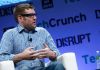 Chris Dixon, the entrepreneur-turned angel investor-turned general partner at VC firm Andreessen Horowitz, today said that he believes the 3D printing movement has the potential to revolutionize manufacturing and that it is an area where he would like to make multiple investments in the future. In contrast, he described startups in areas like social networking facing "general fatigue". Earlier this month, Chris Dixon and Andreessen Horowitz led a $30 million Series C round in Shapeways, a 3D printing company, where he has now joined the board.


![[ Back to EurekAlert! ]](http://www.eurekalert.org/images/back2e.gif) Public release date: 17-Apr-2013
Public release date: 17-Apr-2013 Share ]